
Geohazards and Georisks in Pipeline Engineering

Course Overview
The course will provide an in-depth introduction to the subject and importance of natural hazards during the stages of evaluation, design, construction, and operation of a pipeline. Delegates will learn about the need for qualitative and quantitative assessment of the risk associated with various natural hazards (such as flooding, landslides, and earthquakes) in relation to route selection and pipeline integrity. Additionally, potential protection/mitigation measures and monitoring techniques, both related to risk management, will be presented.
The main disciplines that will be presented during the course are hydrology, hydraulics, engineering geology, soil mechanics, and rock mechanics, while special emphasis will be given to slope instabilities and soil-structure Interaction. Finally, since many countries worldwide are characterized by moderate or high seismicity, the course will also introduce the topics of geotechnical earthquake engineering, pipeline seismic design, and strain-based design.
Agenda
1 Introduction
1.1 Types of Geohazards
1.2 Case Histories of Geohazards
2 Geohazards & Pipeline Design and Operations
2.1 Assessment of Geohazards
2.2 Pipeline Vulnerability to Geohazards
2.3 Risk Management
3 Earthquake-related Geohazards & Seismic Pipeline Design
3.1 Assessment of Earthquake-related Geohazards
3.2 Pipeline Vulnerability to Earthquake-related Geohazards
3.3 Seismic Risk Management
4 Monitoring Techniques
4.1 Ground Deformations
4.2 Seismic Ground Motion
4.3 Pipeline Distress
Target Group
Managers, pipeline engineers, technicians, or other interested personnel from operators that are involved in the stages of evaluation, design, construction, and operation of a pipeline. Engineering consultants active in the field of geotechnical engineering. Personnel from authorities or certification bodies involved with pipeline integrity, assessment and licensing.
Approval (for German engineers)
This training course is recognized as a training session in accordance with §6 FuWo. Consulting engineers and members of the German Chambers of Engineers receive 8 training points for participation

Dr. Baumgard is a Principal Geotechnical Engineer at BGC Engineering with more than 30 years of experience provided consulting in North and South America, Europe, and Africa. After completing his Ph.D. in geotechnical engineering related to pipe-soil interaction at the University of Cambridge in the UK, he joined BGC Engineering, a consulting firm specialising in earth sciences and engineering. Alex has participated in the hazard assessment of pipelines for more than a dozen major operators of transmission systems, in such environments as steep mountains and regions subject to earthquakes and evaluated and mitigated sites subject to landslides, debris flows and flooding and has participated in the risk assessment and management of more than 10,000 km of pipeline throughout those regions.
Over the period of 2012 – 2024, he was the geotechnical engineer of record for the design and construction of the Trans Mountain Expansion Pipeline in Canada, an almost 1200 km pipeline through challenging terrain including crossing through both the Rocky Mountains and Coastal Mountain ranges, through a seismically active zone, and crossing multiple landslides, rockfall and avalanche paths.
A Chartered Engineer and Fellow of the Institution of Civil Engineers in the UK, and a Professional Engineer and Professional Geoscientist in Canada, Alex brings a practical approach to managing and mitigating geohazards from decades of in-field experience.

David Waring is a Principal Engineering Geologist at BGC Engineering with more than 29 years of international ground engineering experience, including 13 years with BP as an onshore pipeline geohazard specialist supporting projects and operations across Europe, US, West Africa, Asia and the Middle East. His expertise spans terrain evaluation, landslides, river crossings, desert geohazards and horizontal directional drilling, supporting decisions from route selection and design through construction and operational integrity management.
He has contributed to major developments including the BTC and SCP pipelines, the Southern Gas Corridor, Khazzan and Gazeer gathering and export pipelines in Oman, and UK carbon capture and storage infrastructure. David now supports BGC’s pipeline geohazard management programmes in Canada and the United States and is one of the business development leaders driving growth in Europe.
A Chartered Engineer and Registered Ground Engineering Adviser (UK), David brings both operator and consultancy perspectives to the course, drawing on practical experience to help pipeline engineers recognise, assess and manage geohazards throughout the pipeline lifecycle.
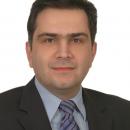
Dr. Psarropoulos is a Structural and Geotechnical Engineer with almost three decades of balanced academic and industry experience in the analysis and design of complex structures and geostructures.
After earning his Ph.D. in Geotechnical Earthquake Engineering from the National Technical University of Athens (NTUA), he conducted advanced research across institutes in Greece and Italy. His academic trajectory includes serving as an adjunct Associate Professor of Geophysics and Earthquake Engineering at the Hellenic Air-Force Academy, as well as an Otto Mønsted Visiting Professor of Offshore Geotechnical Earthquake Engineering at Aarhus University in Denmark. He currently teaches Geotechnical Engineering at the School of Rural Surveying and Geoinformation Engineering of NTUA.
Complementing his academic career, Dr. Psarropoulos has acted as a consulting engineer on high-profile infrastructure projects internationally. His primary expertise lies in Geotechnics, Soil Dynamics, and Earthquake Engineering—with a specialized focus on static and dynamic soil-structure interaction (foundations, retaining structures, pipelines), slope and embankment stability, and numerical simulations of dynamic soil response (local site effects and microzonation studies). Notably, he was a key expert in the quantitative geohazard assessment and seismic design of two major high-pressure gas pipelines in south-east Europe (IGI-Poseidon and TAP).
Seminars Contact
